Carbon data for textile manufacturers is now requested by EU brands through supplier questionnaires and ESG platforms rather than by any regulator directly.
Carbon data for textile manufacturers the brands now demand.
EU fashion companies report their value chains under CSRD and their own climate commitments — and your factory is in that value chain. The manufacturers who can answer the data requests stay preferred partners.
Carbon data for textile manufacturers: three directions the pressure comes from
For textile and apparel manufacturers in the Western Balkans, the requests arrive through the brand relationship — and they're getting more specific.
Supplier ESG platforms
Fashion brands collect facility energy and emissions data from manufacturing partners annually, through questionnaires and supplier platforms — with scorecards that procurement sees.
ESG in the sourcing decision
Brands moving production closer to Europe weigh ESG readiness alongside price and lead time. A documented inventory is part of the professional manufacturer's pitch.
Green-lending conditions
Machinery upgrades and solar installations are exactly what green credit lines fund — and a GHG baseline is increasingly the condition.
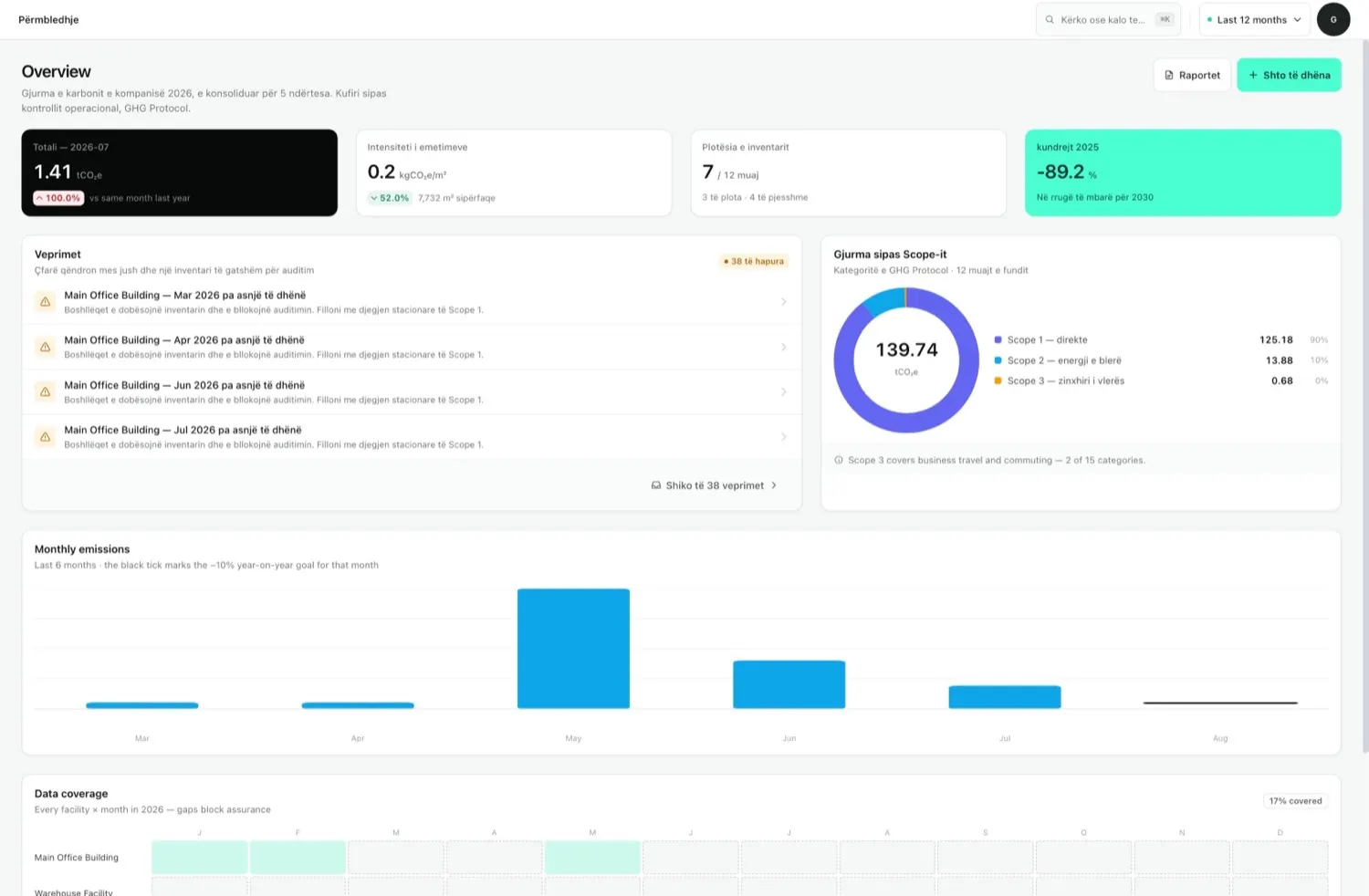
Your whole inventory, in one honest view
Consolidated footprint across facilities, scope breakdown to the GHG Protocol, monthly trends — and the gaps stated, not hidden.
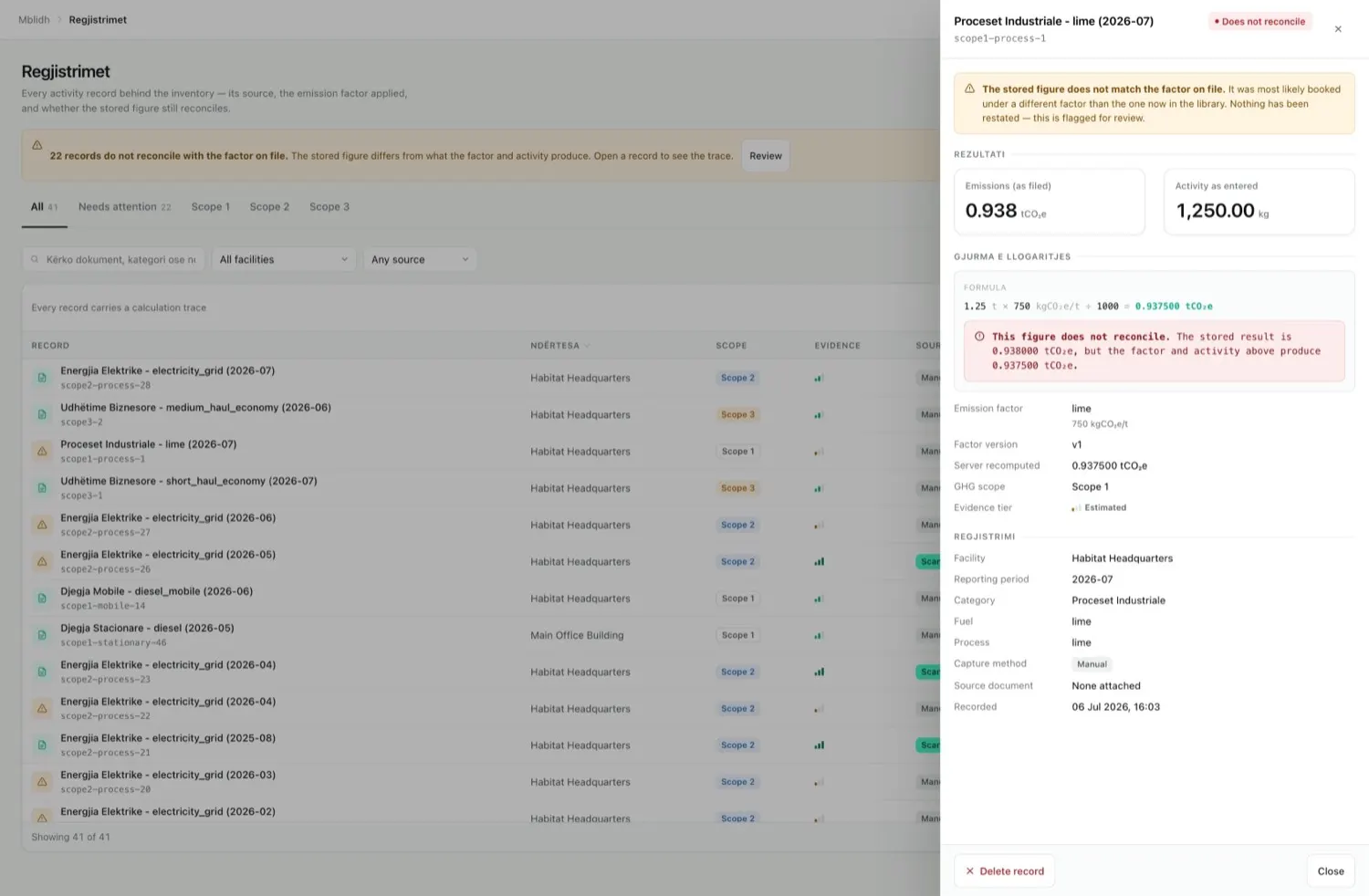
Every figure can show its work
This is what your buyer's reviewer gets from a Karbon360 inventory: each record stores its activity data, the exact factor and version applied, and a server-side recomputation. When something doesn't reconcile, the platform flags it — before the reviewer finds it.
- Installation-level records — facility by facility, month by month.
- Facility energy tracked properly — machinery, climate control, steam and ironing lines.
- Factors named and versioned, disclosed to the report recipient.
- Reconciliation checks that state discrepancies instead of smoothing them.
Written for reviewers: the methodology page.
What "good data" means in this sector
Textiles isn't a CBAM sector — the bar here is facility-level energy and emissions data a brand's ESG team can file without follow-up questions. What that means in practice:
The apparel manufacturer's data package
- A full-year Scope 1 and Scope 2 inventory — facility-level, monthly records behind it.
- Fuel consumption by type — heating, steam, generators, company vehicles.
- Electricity consumption — the dominant line for most factories, calculated with your country's actual grid factor.
- A stated boundary and data quality — measured versus estimated, said plainly.
- Factors and documentation — named, versioned sources, and a calculation a third party can re-trace.
How supplier requests work — and what happens to non-responders — is on our supply chain page.
Two ways to start
Depending on whether the request is already on your desk.
A brand has already asked
Tell us which brand's platform or questionnaire you're facing. We'll map exactly what you need to have in place — before the submission window closes.
Contact usNot yet — but it's coming
Get a rough footprint estimate and the brand-questionnaire evidence checklist for your factory. Free, about five minutes.
Get your estimateFrequently asked questions
No — textiles are not a CBAM sector. The pressure comes from brands reporting their value chains under CSRD and their own commitments, collected through supplier ESG platforms and questionnaires.
Facility-level energy consumption and a Scope 1 and 2 inventory with methodology, entered annually into the brand's platform. Renewable share and reduction plans are common follow-ups.
Rarely alone — but weak or missing data increasingly loses them. Scorecards factor in data quality, and nearshoring decisions weigh ESG readiness alongside price and lead time.
Mostly purchased electricity for machinery and climate control, plus fuel for heating, steam and vehicles. Electricity usually dominates — which is why the correct national grid factor is decisive.