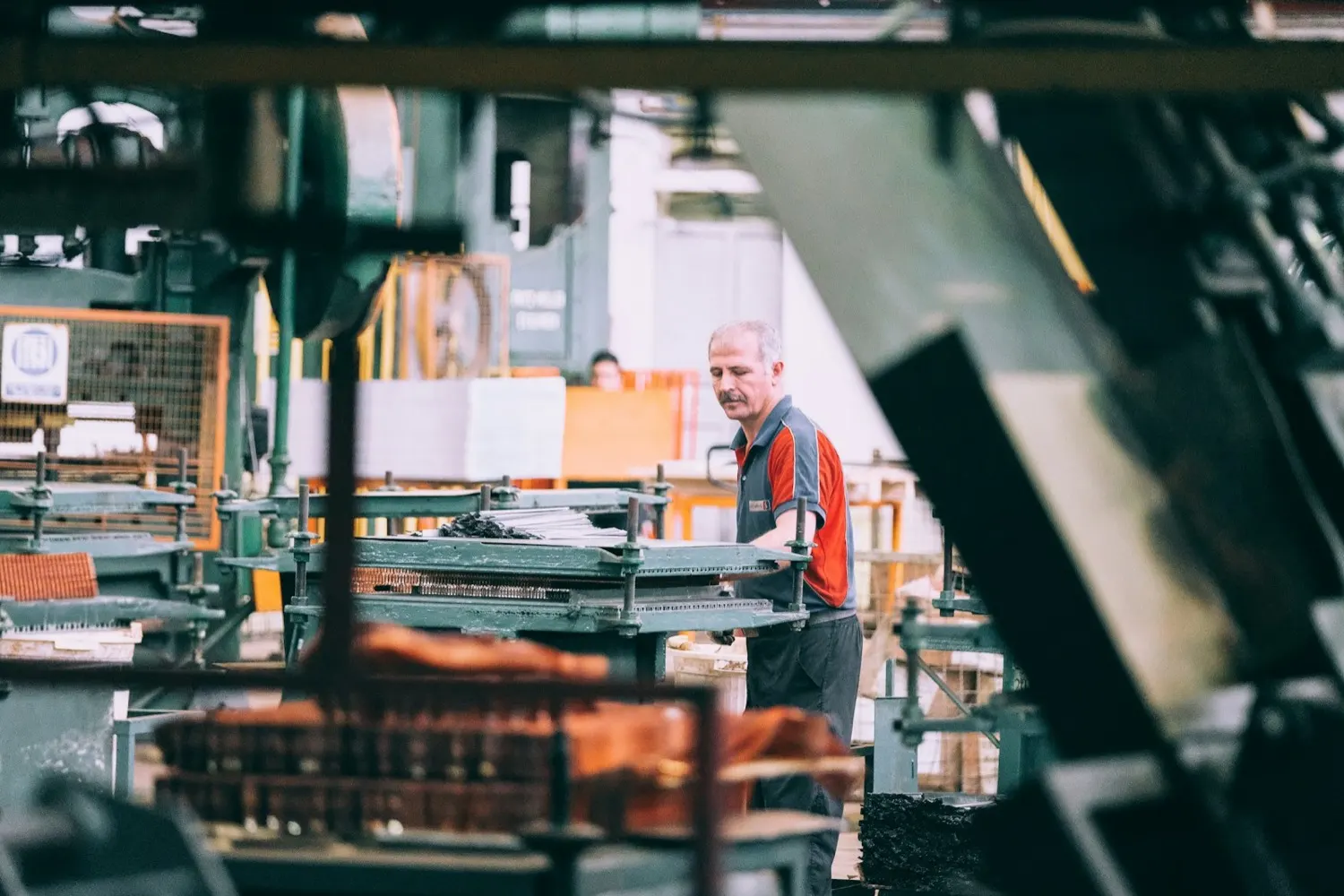
Exporters of CBAM goods
Metals, cement, construction materials, fertilisers
Their EU importer needs installation-level embedded-emissions data — or falls back on default values that make the goods more expensive.
Karbon360° is carbon management software that turns the invoices you already hold into a greenhouse-gas inventory a bank, customer or reviewer will accept — with locally accurate factors and a calculation trace behind every figure.








None of this is voluntary. The trigger is a buyer, a bank or a border.
Which is why the conversation is about acceptance, not sustainability
01 / Why now
Emissions data is reaching Balkan companies the way every compliance requirement does — from outside, with a deadline attached.
1 Jan 2026 — live
EU importers of steel, aluminium, cement, fertilisers, hydrogen and electricity must account for embedded emissions. They are collecting installation-level data from suppliers now; certificate purchases begin February 2027.
Trigger · a CBAM data request
2026 → rolling
Large EU companies report their value chains. Simplified and rescheduled by the 2025 Omnibus, but the direction is unchanged: their suppliers receive emissions questionnaires and scorecards.
Trigger · a customer questionnaire
Every renewal
Sustainability-linked credit lines, often IFI-backed, increasingly require a GHG baseline at application and annual updates over the life of the loan.
Trigger · a bank requirement
02 / Who buys, and why
The buyer inside the company is the CFO, the finance manager or the operations manager. They have the invoices. What they need is the calculation between the invoice and the answer to be correct and defensible.
Exporters of CBAM goods
Their EU importer needs installation-level embedded-emissions data — or falls back on default values that make the goods more expensive.
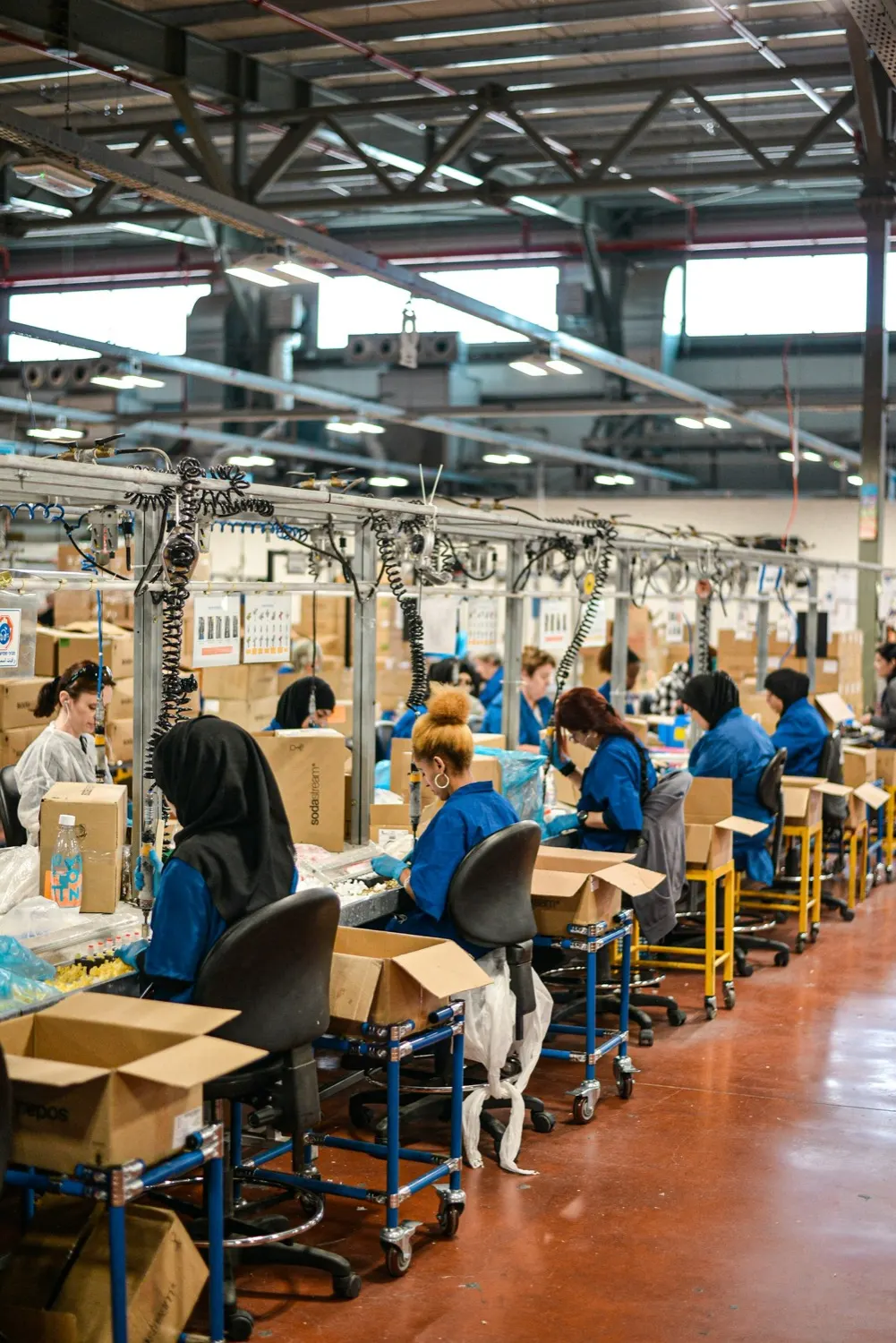
Suppliers to EU corporates
Their customer's sustainability team sends a Scope 3 questionnaire with a deadline — and a supplier scorecard behind it.

Borrowers
The bank asks for a GHG baseline at application and annual reporting as a condition of the loan.
03 / How it works
The same chain runs every month: what you already hold goes in, each step keeps its receipt, and the report comes out with the trace still attached.
Data in
Karbon360° engine
Every step stores what it used — document, factor, version, arithmetic.
Out
1,284 tCO₂e
Scope 1, 2 and 3 · coverage 94% · every figure traced
Nearly every real request is a request for Scope 1 and Scope 2 done properly.
That is where the product is deepest
04 / The platform
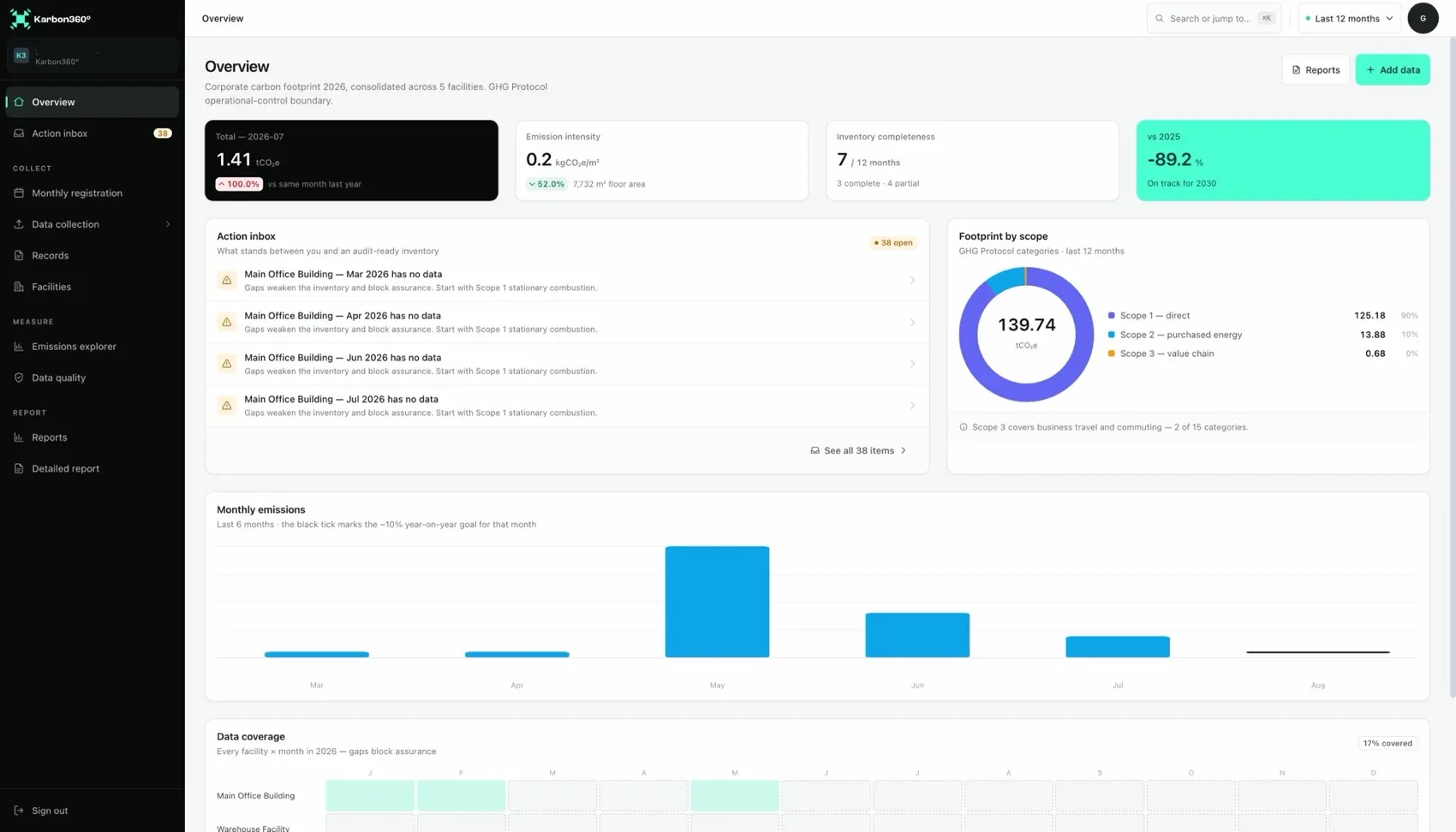
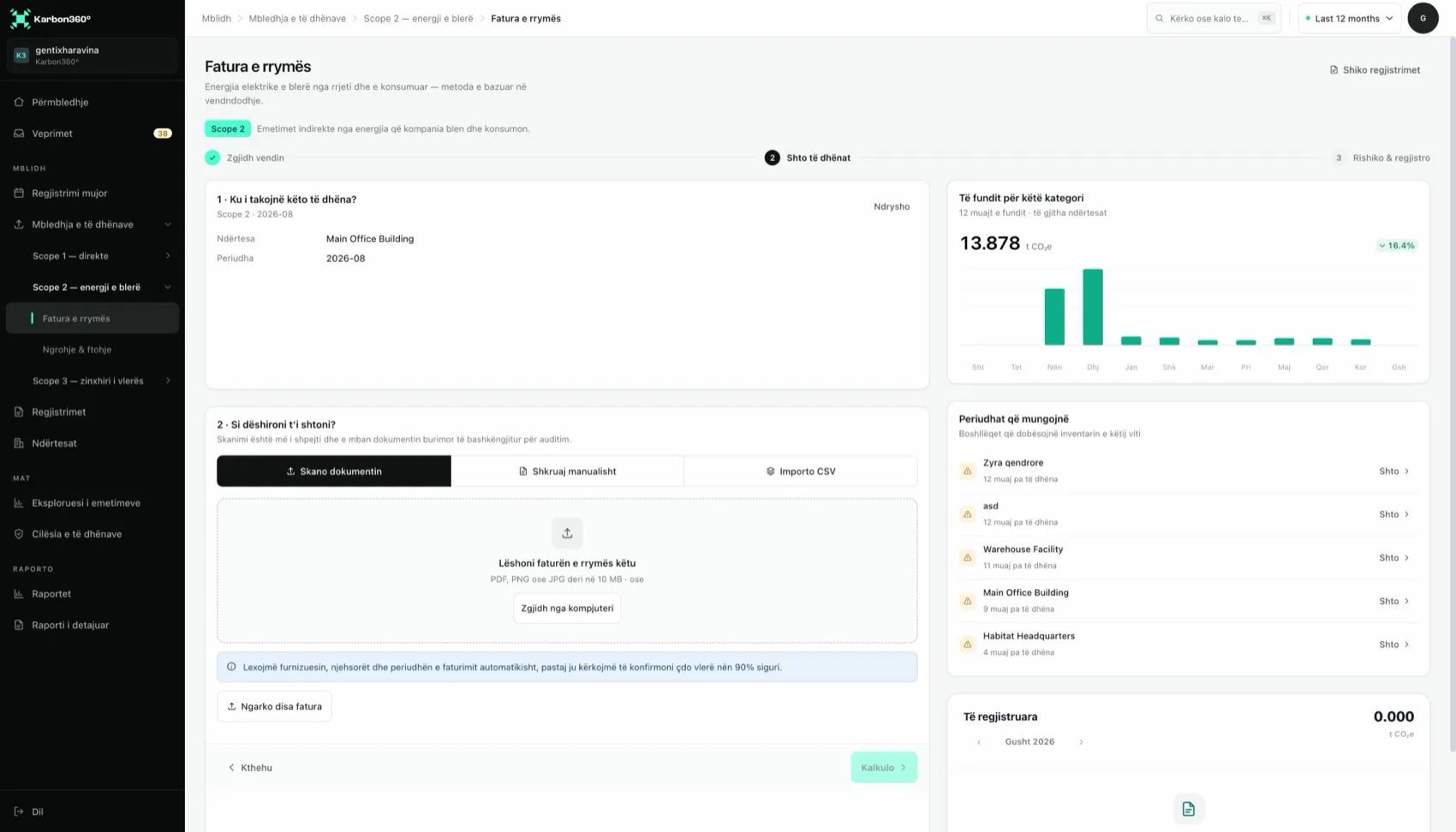
Nothing here is a mock-up. This is the product, in the languages your team already works in.
Scan a supplier bill, type it manually or import a CSV. The platform reads the supplier, the meter and the billing period, then asks you to confirm anything it is less than 90% sure about.
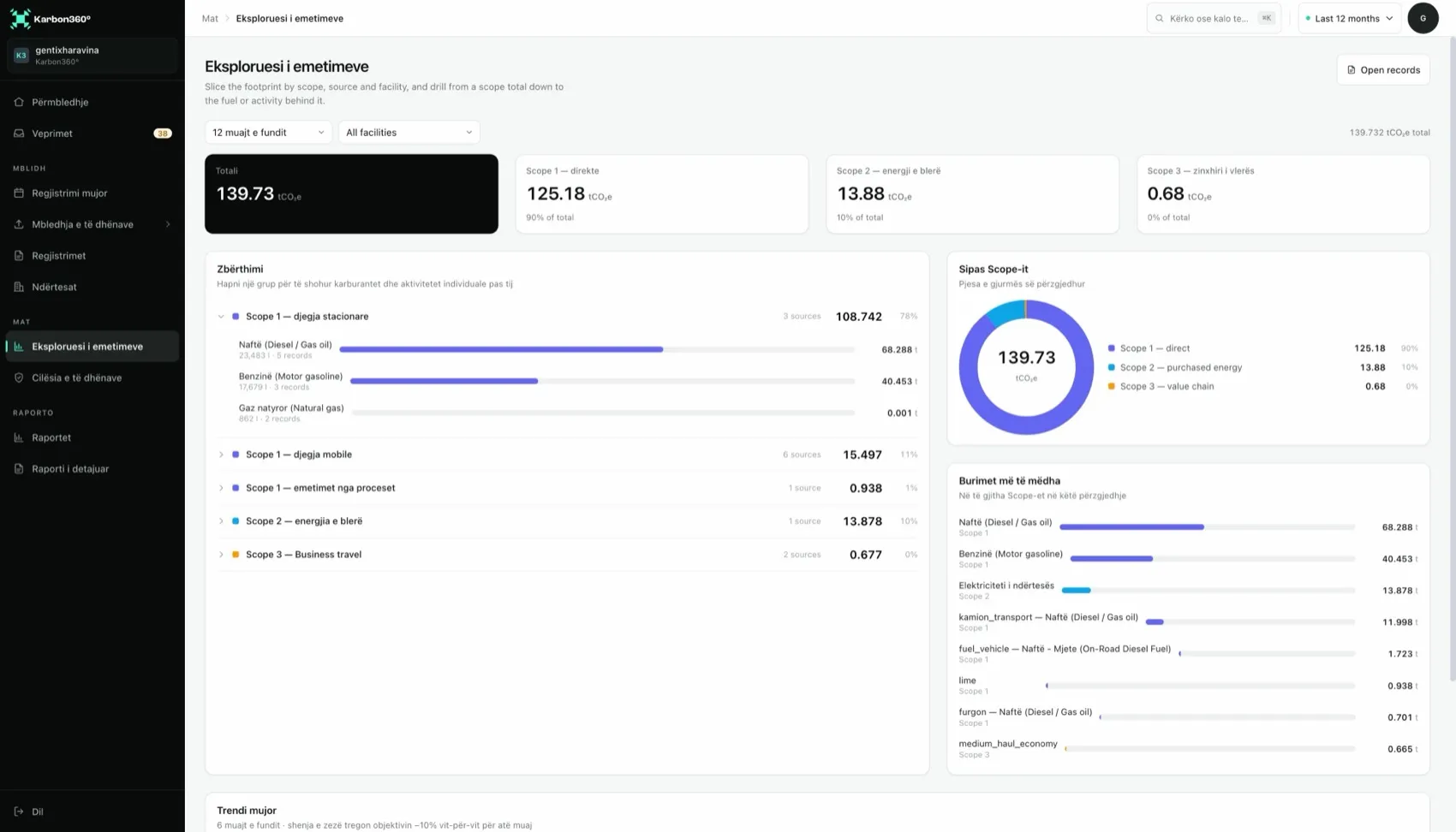
Slice the footprint by scope, source and facility, then open any group to see the individual fuels and activities underneath — with the record count behind each number.
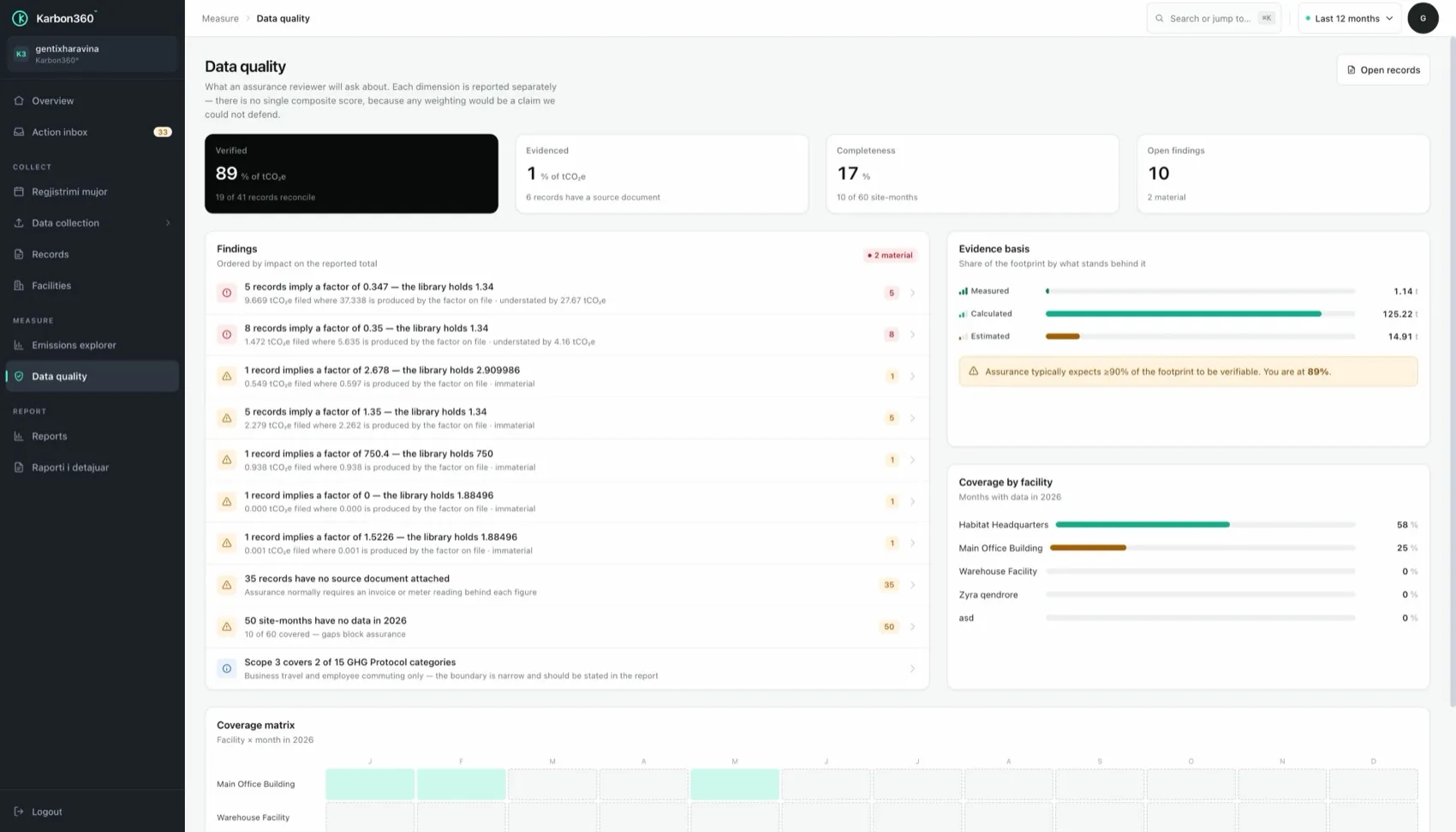
Data quality is reported as separate dimensions, not a single flattering score — because any weighting would be a claim we could not defend. If 89% of your footprint is verifiable, it says 89%.
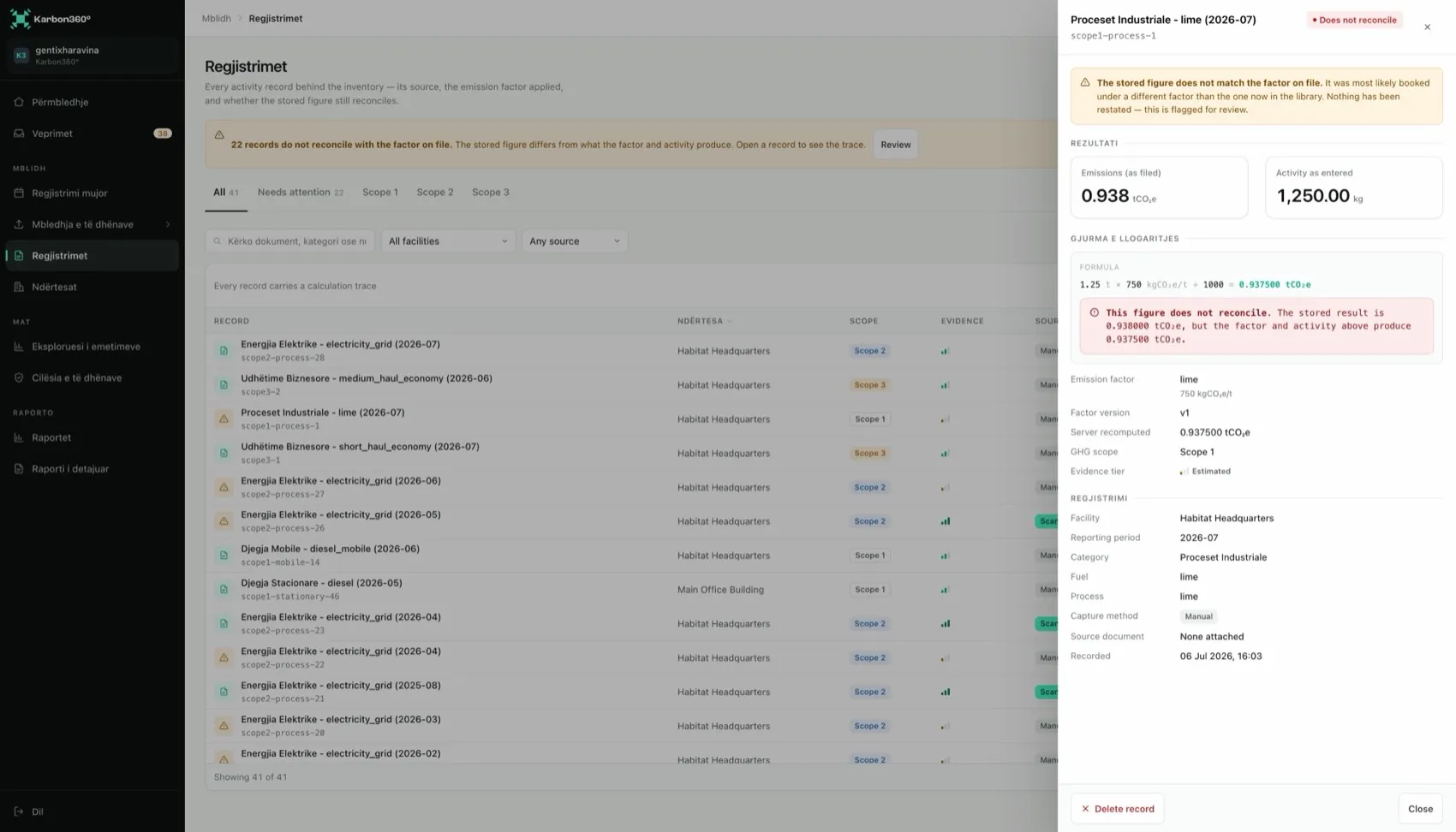
Every record carries its calculation trace: the activity as entered, the factor and its version, the server-recomputed result — and a flag when the stored figure no longer reconciles with the factor on file.
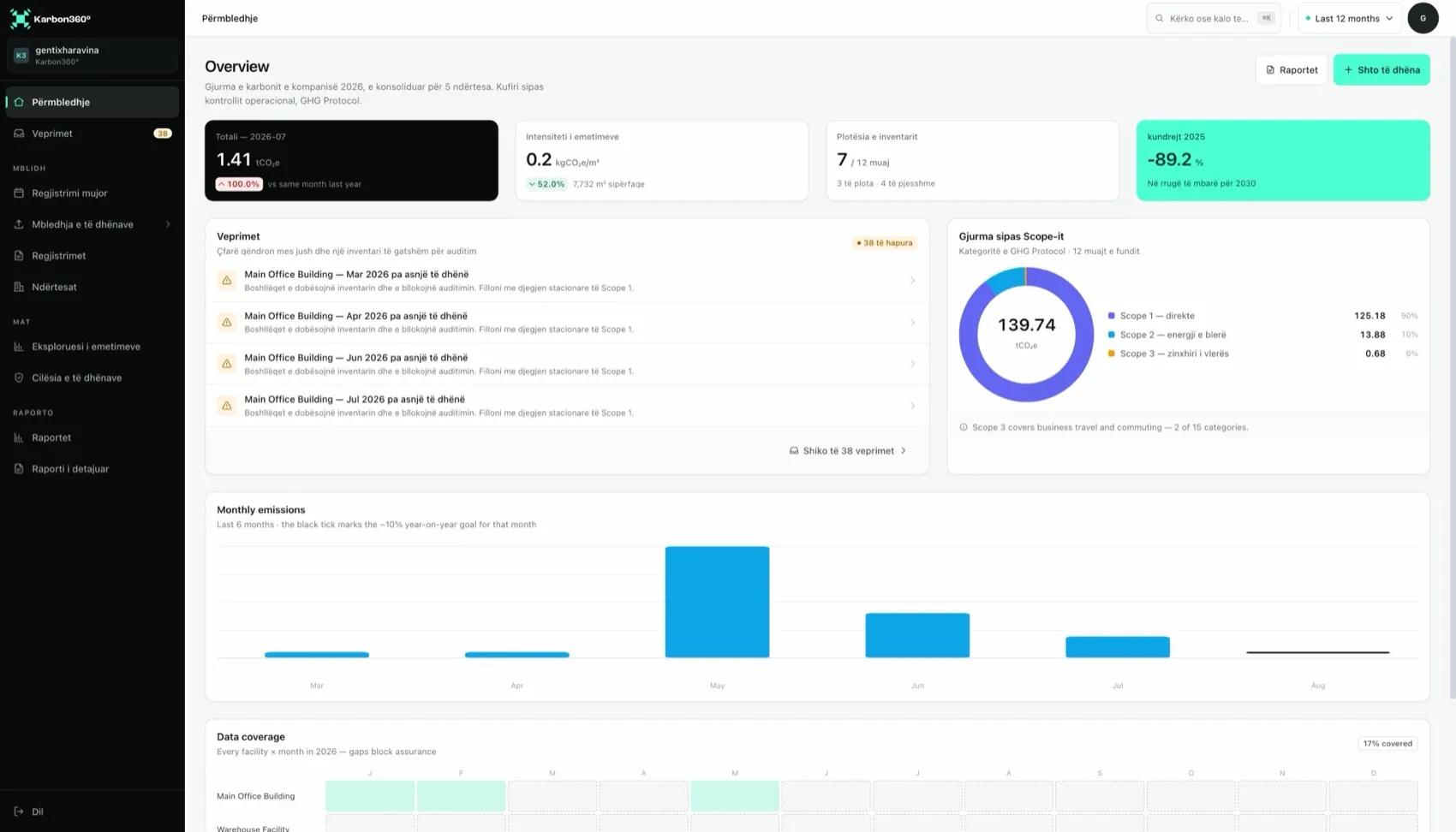
The person entering invoices is rarely the person reading EU guidance. Karbon360 runs in Albanian, Macedonian, Bosnian, Serbian, Croatian and Turkish — including the findings, the warnings and the guidance text.
05 / Three principles
It is “will my bank or my customer accept this?” Everything in the platform serves that question.
Calculations use locally accurate emission factors for the region's grids and fuels — not international averages. On some Balkan grids a European-average factor misstates the result by multiples.
Each record stores the exact factor used, its version and a server-side recomputation. Any number in any report traces back to the data and factor that produced it.
Coverage and reconciliation are reported separately, never blended into a score. When something does not reconcile, the report says so plainly — because a reviewer will notice anyway.
Share of the footprint by what stands behind it
Review expects at least 90% of a footprint to be verifiable. Karbon360 tracks that share continuously, so you know where you stand months before your reviewer asks.
06 / Your market
| Country | Relationship to EU rules | Main pressure on companies | Priority sectors |
|---|---|---|---|
| Croatia | EU member — companies are directly in scope | Direct compliance: CBAM declarants, CSRD reporters and their suppliers, EU-bank lending conditions | Importers of steel & aluminium, construction materials, food processing, manufacturing suppliers to EU groups |
| Albania | Candidate — supplier side of EU rules | EU customers' data requests, bank baselines; a hydro-heavy grid makes correct local factors a genuine advantage | Textile & footwear (fason), food exporters, construction materials, metal processing |
| North Macedonia | Candidate — supplier side of EU rules | CBAM exposure in metals; a coal-heavy grid makes electricity the dominant footprint line | Steel, ferroalloys, automotive components, agri-food |
| Montenegro | Candidate — supplier side of EU rules | EU buyer requests and green-lending conditions; mixed hydro/coal grid | Metals (aluminium), food, construction, hospitality supply chains |
07 / Why it is different
The tools available for answering these requests were built elsewhere. Generic international platforms calculate with European-average factors that misstate results in this region, produce polished reports whose numbers cannot be traced, and price for markets that have sustainability departments.
08 / The clock
CBAM stopped being paperwork on 1 January 2026. Emissions embedded in goods imported since then carry a real price, payable in certificates. The data you need is historic — it cannot be reconstructed later.
07 / Keep going
Karbon360° (sometimes written Carbon360 or Carbon 360) comes with the explanations we wish every supplier had: free to read, written for people who are not carbon specialists.
Learn the method
Use the product
Answer a request
09 / Questions
No. Only the authorised CBAM declarant files — the EU importer of record, or an indirect customs representative acting for them. A producer outside the EU never touches the registry. But the declarant cannot file without your installation-level data, which is why the request lands in your inbox rather than theirs.
Through that buyer, yes. The de minimis exemption applies to the importer, not the producer, so the same factory can be exempt through one customer and fully in scope through another. Since you cannot predict which buyer will ask, the only workable position is to have the data ready before any of them do.
Business travel and employee commuting — the two categories customers ask for first. The boundary is stated explicitly in every report. The remaining categories are a roadmap decision, and we label roadmap as roadmap rather than implying coverage we do not have.
Because your reviewer will. Review normally expects at least 90% of the footprint to be verifiable, and most inventories start well below that. Showing you a comfortable number would only move the disappointment to the point where it costs you money.
You can, and they are deliberately set high — they exist to remove any incentive to withhold real data. For most producers in the region, particularly those on hydro-heavy grids, actual installation-level figures come in materially below the default. That gap is the entire commercial argument for measuring properly.
Albanian, Macedonian, Bosnian, Serbian, Croatian and Turkish, alongside English — including findings, warnings and guidance text, not just navigation labels. Reports still export in English for the EU buyer.
The numbers behind the deadline
Bring one month of energy bills and one production figure. In thirty minutes you will have a traced Scope 1 and 2 number for your facility — and an honest read on how much of it would survive review.