GHG inventory checklist: what to collect and what to check before you report
This GHG inventory checklist has two halves: the paperwork to gather before your first session, and the checks to run before you send a report. Effort depends on how scattered your records are, not on how big your company is.
GHG inventory checklist, part one: what to collect
Everyone
- A list of facilities: name, address, city, country, type and floor area in m². One entry for every site with its own electricity bill.
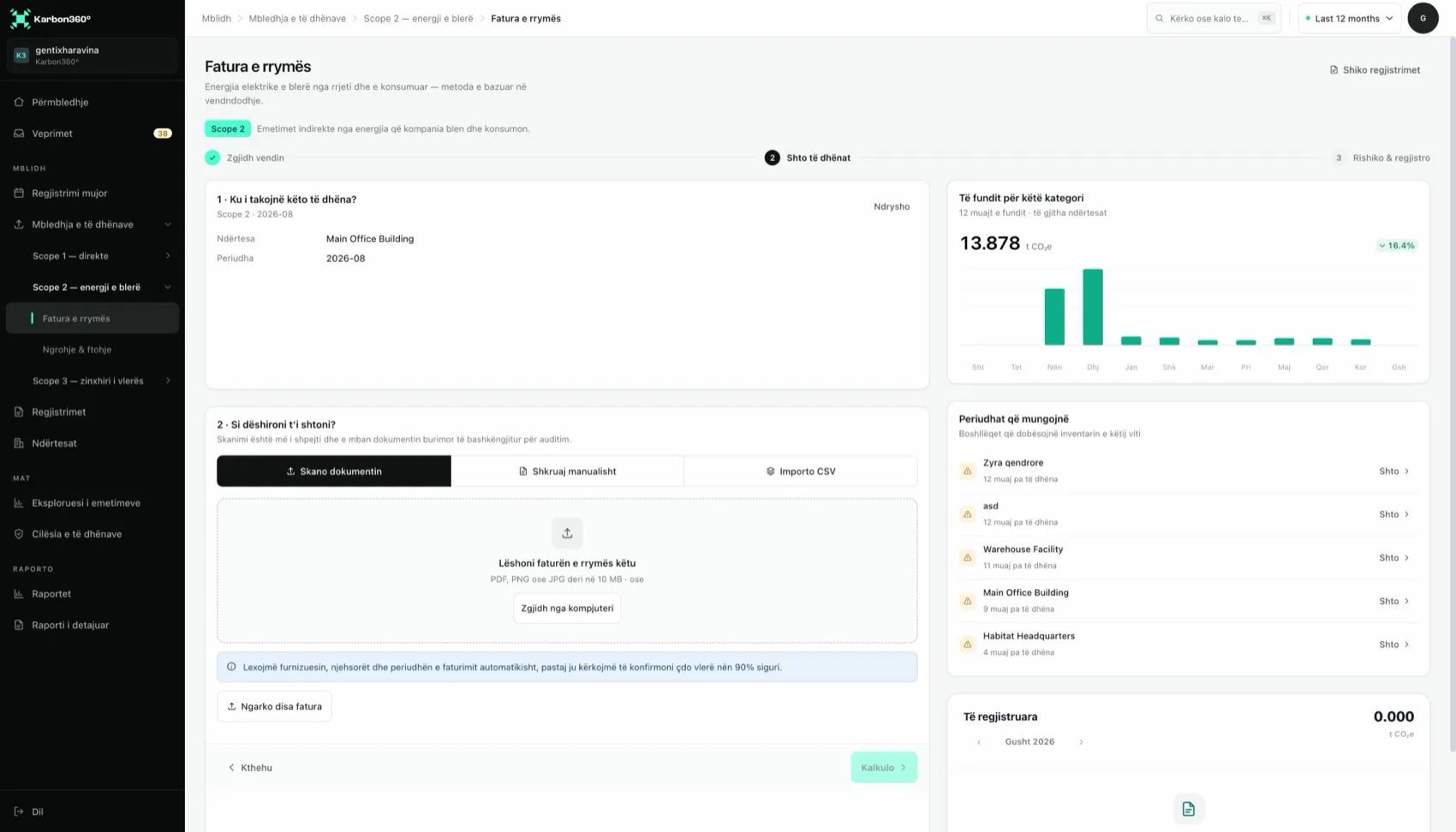
- About twelve months of electricity invoices per facility (a PDF or a photo is fine), and district heating or cooling bills if you have them.
- Fuel purchase records with quantities: diesel, heating oil, natural gas, LPG, coal, wood, pellets. Generator fuel logs or receipts.
If you have vehicles
- A fleet list by fuel type (diesel, petrol, LPG, CNG), fuel cards or receipts in litres, or kilometres driven, plus fuel for on-site machinery such as forklifts and loaders.
Industrial sites
- Monthly production volumes in tonnes: clinker, lime, glass, ceramics or bricks, steel, aluminium. Raw-material use where relevant: limestone, dolomite, soda ash.
Scope 3
- Business travel: flights (origin and destination, or distance, and class), rail, bus and car trips.
- Employee commuting: headcount per site and how people get to work. A short survey works.
Context
- The request itself (bank template, customer questionnaire or CBAM data request) so you know the deadline and scope asked for, and one named person responsible per facility.
Start with electricity, and do not estimate what you can measure
If time is short, load twelve months of electricity invoices for every facility first. If an invoice is missing, request a copy before entering an estimate.
GHG inventory checklist, part two: close the year
- Structure. Every facility that operated this year is registered, with the right country and floor area. Closed sites are archived, not deleted. Company name and logo are current.
- Completeness. The coverage matrix shows twelve complete months per facility. Electricity has twelve evidenced invoices per facility. All heating and generator fuel is entered, vehicle fuel covers all twelve months, and production volumes are in for industrial sites. Business travel is logged and the commuting survey is done this year.
- Consistency. The action inbox is at zero. No open reconciliation findings. No duplicated invoices. No month more than about 30% off its neighbours without a reason. The estimated share is as low as possible.
- Output. Report preview reviewed page by page, baseline year selected from year two, PDF downloaded and filed with the source documents, and a CSV export prepared if the recipient uses a template.
Open five random records and check them against the paper before you send anything. Your first complete year becomes your baseline, so keep the method stable from then on.
A simple CSV template for monthly data
If your data lives in a spreadsheet or an ERP export, one row per facility, per month, per item imports in one step. The usual columns are facility, period (YYYY-MM), item, quantity and unit:
- Plant Ferizaj, 2026-01, electricity_grid, 17950, kWh
- Plant Ferizaj, 2026-01, natural_gas, 2310, m3
- Warehouse Prishtina, 2026-01, diesel, 420, l
Ask support for the current template for your account. The full rules are in CSV import for emissions data.
Keep reading
- How to use Karbon360 — the whole path in one guide
- Set up facilities — the first thing to do in the product
- What is a GHG inventory? — definition and contents
Want your team trained on Karbon360?
We run hands-on training for finance and operations teams, on your own data, in Albanian or English. Training is a paid service, quoted per team. Tell us who needs to learn what and we will send a proposal.