Scope 1 fuel and process emissions: what to enter and where
Scope 1 fuel and process emissions are the direct emissions from fuel burned on site, from company vehicles, and from the chemistry of production. This guide lists what to enter in Karbon360 for each, from which document, and the mistakes we see most often.
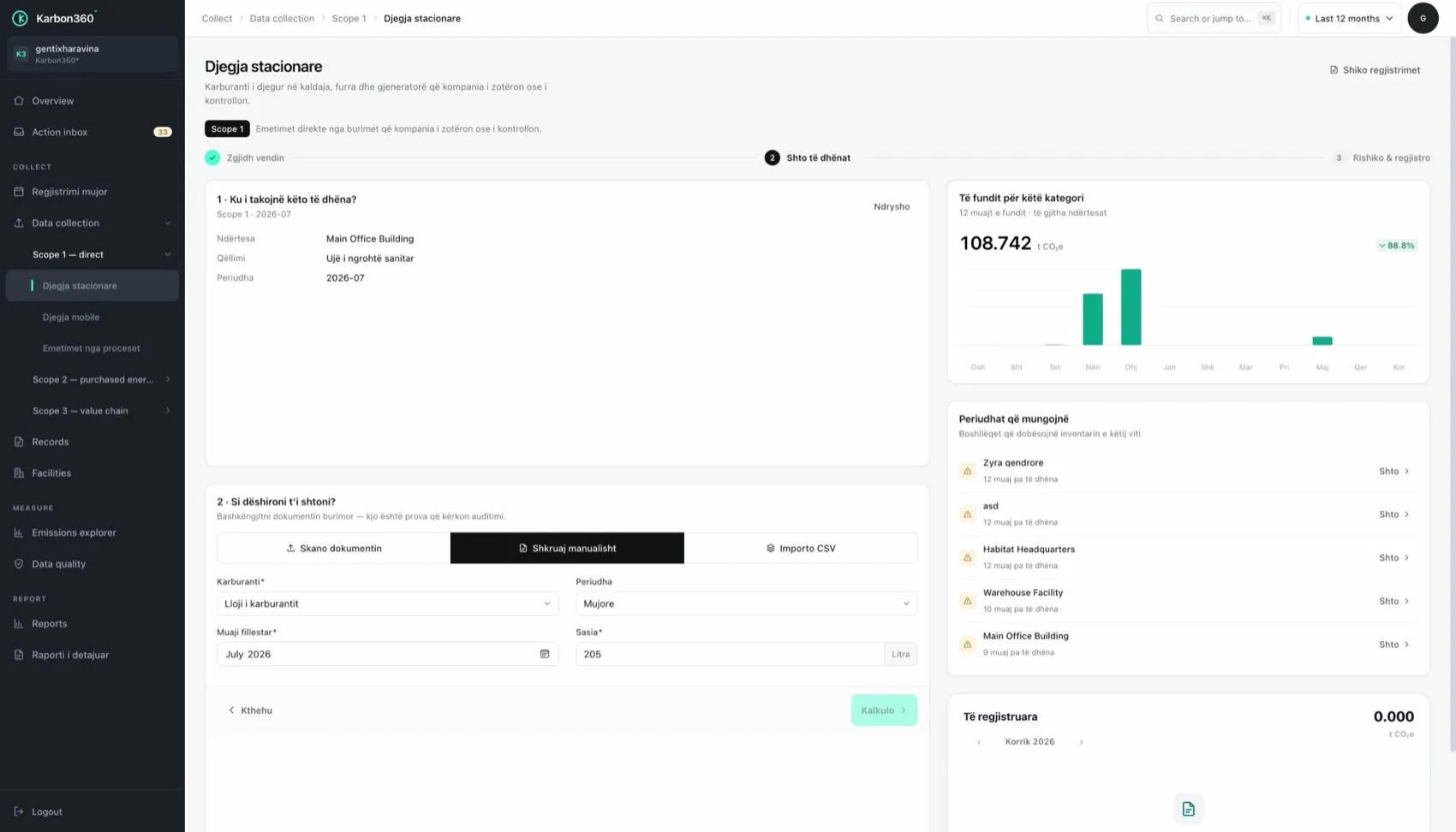
Scope 1 fuel and process emissions: stationary combustion
Boilers, furnaces, kilns, ovens, space heaters and back-up generators. Fuels available: diesel and gas oil (litres), heating oil (litres), natural gas (m³ or kWh), LPG (litres or kg), coal (kg or tonnes), wood and wood waste (kg, tonnes or m³), wood pellets (kg or tonnes) and generator fuel (litres, from the logbook or receipts).
- Go to Scope 1, then Stationary combustion, then Add record, or scan the fuel invoice.
- Select the facility, the period and, optionally, the device (for example "Boiler 2").
- Choose the fuel and enter the quantity and unit. Karbon360 converts to energy and to CO₂e.
- State the purpose (heating, production, back-up power). It helps in the explorer and for CBAM allocation.
Common mistakes: entering a purchase in one month for fuel used across several, mixing up litres and kg for LPG, and putting vehicle diesel here.
Mobile combustion: your fleet and machinery
Cars, vans, trucks, buses, forklifts and loaders that the company owns or controls. Measure by fuel (litres) from fuel cards or receipts, which is most accurate, or by distance when the fuel is not known, which is marked as estimated. One record per vehicle type per month is enough.
Do not include employees' private cars used for commuting (Scope 3), or taxis, rental cars and flights for business trips (Scope 3 business travel).
Process emissions: the chemistry of production
Some industries release CO₂ from chemistry, not combustion, such as heating limestone to make clinker. Processes available: cement and clinker, lime, glass, ceramics and bricks, steel and aluminium production, and limestone, dolomite and soda ash use, all entered in tonnes per month.
Enter fuels burned in the kiln or furnace separately under stationary combustion. Process and combustion are reported as distinct lines. For CBAM exporters, keep one facility per installation and enter production monthly: handling this properly is what separates an accepted data set from a default value.
Keep reading
- What are Scope 1 emissions? — the definition
- Supported emission sources — the full list
- CSV import for emissions data — fuel cards and ERP exports
Want your team trained on Karbon360?
We run hands-on training for finance and operations teams, on your own data, in Albanian or English. Training is a paid service, quoted per team. Tell us who needs to learn what and we will send a proposal.