CBAM default values are the numbers an EU importer falls back on when the exporter cannot supply actual emissions data. They are conservative by design, which is exactly why the gap between a default and a real figure is a commercial matter and not only a reporting one.
Where CBAM default values show up in the cost
The importer is the declarant under the carbon border adjustment mechanism, and the importer pays. Since 1 January 2026 the regime is definitive: importers above the 50-tonne annual threshold, introduced by the 2025 simplification, must account for the emissions embedded in the covered goods and, from February 2027, buy certificates for them. A higher declared figure means a higher cost, and an importer will notice which suppliers make it higher.
The penalty mark-up: 10%, 20%, 30%
From 2026 the default values are not just averages. The Commission sets them per product and per country of origin, and then adds a mark-up on top: 10% in 2026, 20% in 2027 and 30% from 2028 onwards. The message of that schedule is not subtle. Defaults are meant to be the expensive option, and they get more expensive every year you stay on them.
Take aluminium structures from Bosnia and Herzegovina (CN 7610, the heading that covers doors and windows). The published base default is 3.721 tCO2e per tonne. An importer with no data from the factory declares 4.093 in 2026, 4.465 in 2027 and 4.837 from 2028. A window fabricator's real direct number is a fraction of that, because cutting, welding and finishing sit outside the CBAM boundary and profiles bought from an EU supplier count as zero.
Your importer needs your emissions data. Without real numbers from the factory, they have to use the default plus the mark-up, and they pay for every tonne of the difference. Two suppliers quote the same price; the one with verified real numbers is the cheaper supplier. That is the whole commercial logic of CBAM, written into one mark-up schedule.
What actual data has to look like
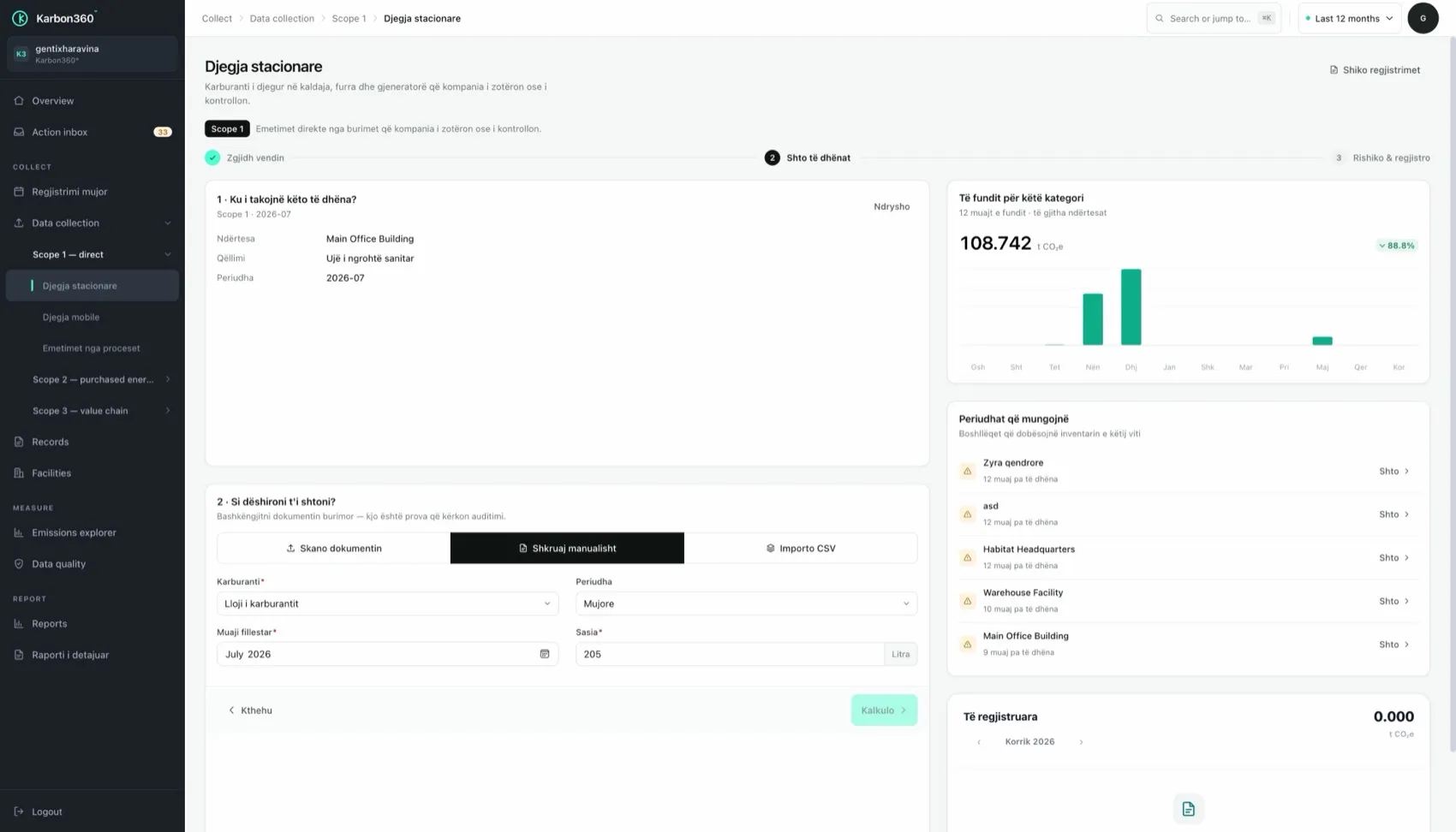
Actual data is installation-level: the emissions of the specific plant that made the goods, for the specific period, divided by what it produced. That means process emissions and fuel combustion kept as separate lines, purchased electricity added, and production volumes recorded every month.
- Register each production installation as its own facility, even if two share an address.
- Enter fuels burned in the kiln or furnace under combustion, and the chemistry of production under process emissions.
- Record production in tonnes each month, not once a year.
- Keep the invoices, meter readings and production logs, because the importer's verifier will ask for them.
Why the route matters
Two plants making the same product by different routes carry genuinely different numbers. An electric arc furnace and a blast furnace are not comparable, and a default cannot see the difference. Actual data can.
What to do this quarter
Ask your importer what they need and by when. Then build the inventory so that every figure traces to a document. The definitions are in the carbon border adjustment mechanism, the report itself is covered in what goes in a CBAM report, and the Scope 1 entries are in Scope 1 fuel and process emissions.