The GHG Protocol Corporate Standard in Karbon360: what is applied and what is not
Karbon360 is structured to the GHG Protocol Corporate Standard, the standard banks and EU buyers refer to when they ask for a greenhouse-gas inventory. This page states plainly which parts the product applies today, and which it does not claim.
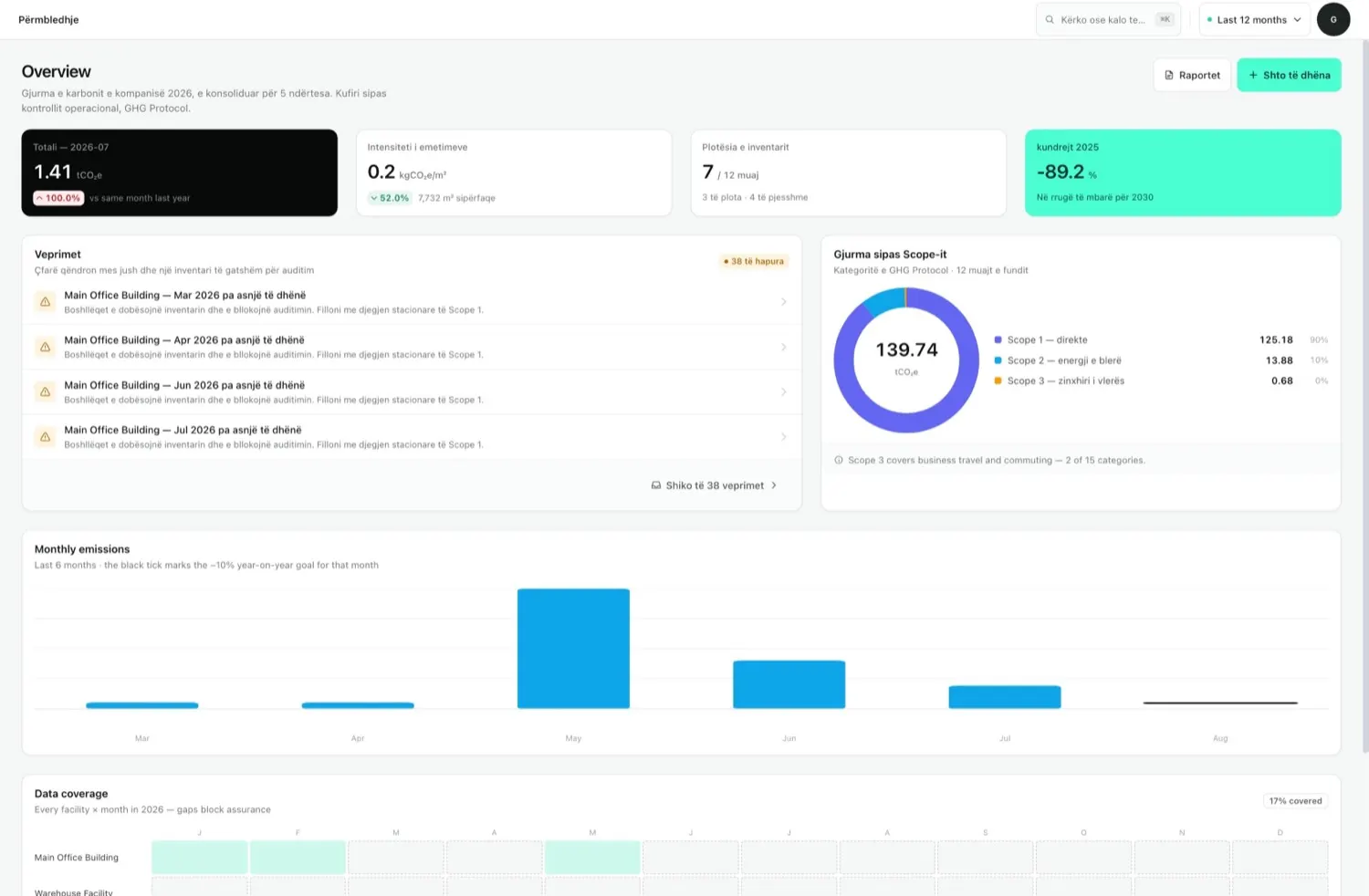
How Karbon360 maps to the GHG Protocol Corporate Standard
Everything hangs off one structure: a company, its facilities, monthly periods per facility, the records inside them, and the reports built from them. Each facility you register is inside the boundary, and the report lists every facility included. A site that is not registered is outside it, and the report says so rather than leaving it implied.
Scope 1 and Scope 2 methods
- Scope 1 covers stationary combustion, mobile combustion and process emissions. Biomass such as wood and pellets is reported with its biogenic CO₂ handled separately, as the GHG Protocol requires.
- Scope 2 uses the location-based method: the national grid factor for each facility's country. Green-energy certificates should be kept on file; location-based reporting is what is applied today.
Scope 3: two categories, stated honestly
Karbon360 covers business travel (category 6) and employee commuting (category 7), the two that customer questionnaires and bank templates ask for first. Every report states the boundary as "2 of 15 GHG Protocol categories". Other categories are on the roadmap, prioritised by customer demand.
If a questionnaire asks for a category outside the boundary, say so. A stated boundary is accepted. An invented number is not. See the fifteen Scope 3 categories.
Baseline year and consistency
Your first complete year becomes your baseline. Keep the method stable from then on, so year-over-year changes reflect real change and not method changes. Period comparisons use the same method, and factor versions are retained, which means a number can always be explained.
What Karbon360 is not
It is not a certification body. It makes third-party verification practical by keeping the evidence, the factors and the trace in one place. A report is not a certificate; if your bank or customer requires assurance, give the verifier the report plus read access to the records.
Keep reading
- Supported emission sources — what you can enter today
- Scope 1, 2 and 3 emissions explained — the three scopes in one guide